
Altria: Gradient

“During the first half of the year, we paid approximately $3.6 billion in dividends and repurchased 5.3 million shares for $335 million. At the end of the second quarter, we had $665 million remaining under our current share repurchase program, which expires at the end of the year. In addition, our balance sheet remains strong. Our debt-to-EBITDA ratio as of June 30 was 1.9x, in line with our target of approximately 2x.” - Heather Newman, Altria CFO, Q2’26 Remarks
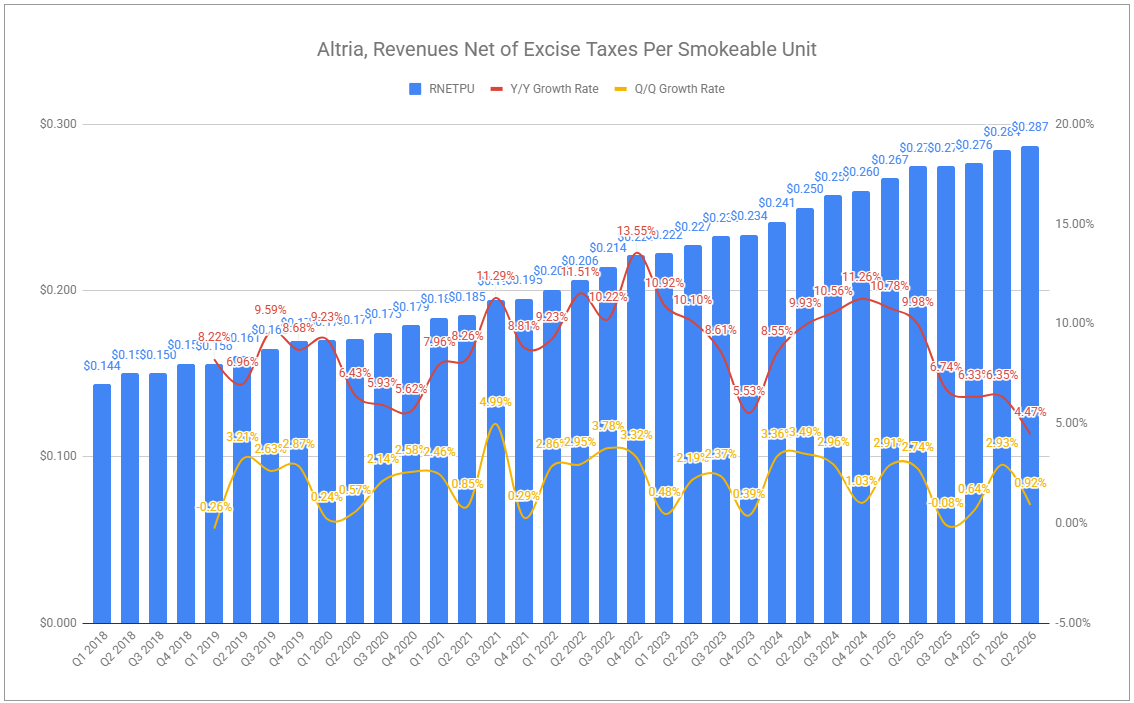
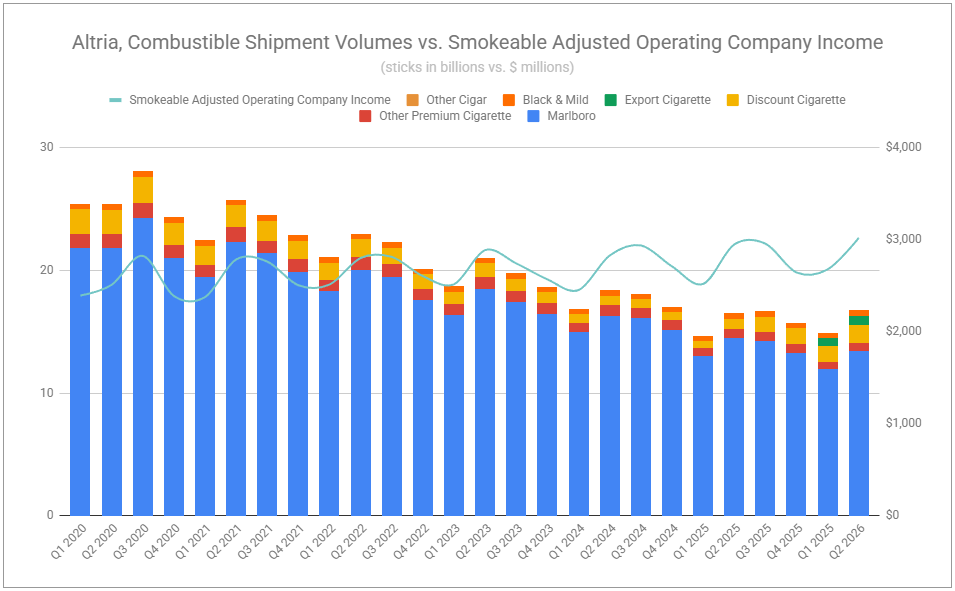
Altria’s Q2’26 results show an aggregate increase in revenue net of excise of 1.2%, and adjusted EPS rose by 2.8% versus Q2’25. By segment, the picture is mixed. Smokeables grew revenues net of excise by 2%, and with adjusted OCI margin expanding by 30bps, segment earnings grew by a commendable 2.4%. Despite consumers remaining under pressure, the company has seen a reduction in its volume decline rate.
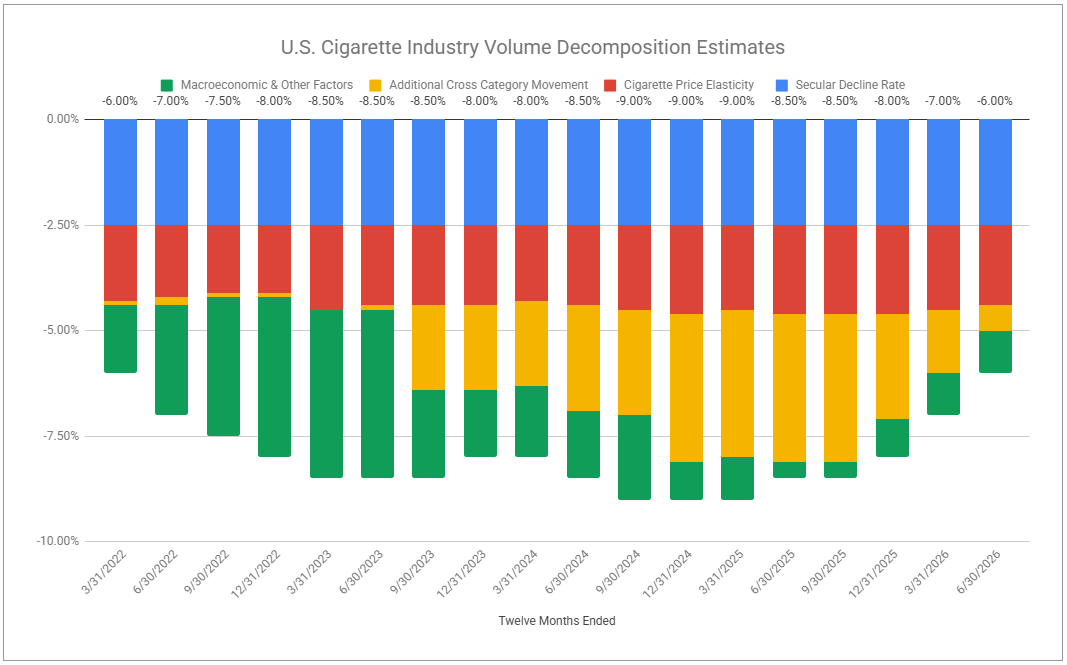
As the group's core profit station, it is worth highlighting the drivers of this strong performance. Part of this is attributable to Basic’s success in the value segment, as well as to Cowboy Cut’s role in keeping smokers engaged within the Altria portfolio. On the top end of the spectrum is Marlboro’s unrivaled dominance in the premium space. Layered on top is the added benefit to the entire combustibles portfolio by enhanced enforcement against illicit products, primarily in the vapor category. This becomes evident when using midpoint adjustments to the U.S. cigarette volume decomp data disclosed by Altria.
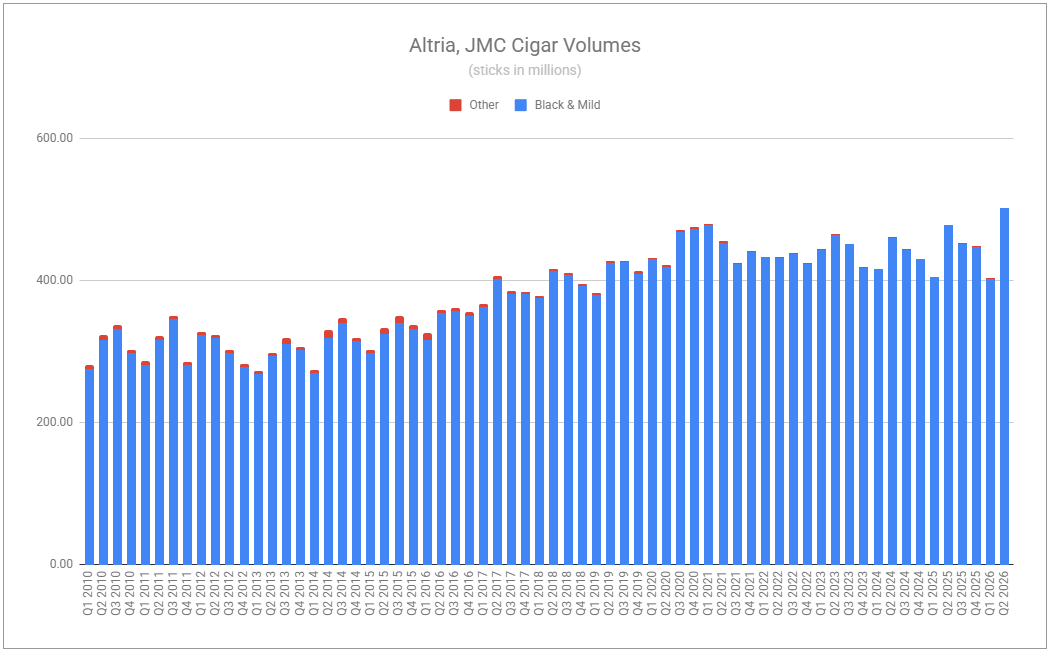
It is also worth noting the sizable 5.2% growth in Black & Mild volumes. While it may be easy to gloss over this performance, given the smaller volume contribution from cigars, the outsized profit contribution (understandably not disclosed) benefits the segment meaningfully. There will be variance in B&M shipped volumes in the coming quarters, but the long-term execution trend remains intact.
Arguably of far higher importance is that Altria stands to benefit from the scaled benefit of its duty drawback scheme throughout the remainder of the year and beyond. While volumes associated with this practice were up meaningfully from Q2 last year (55%), timing dictates that the actual FET credit impact will be more pronounced in the second half of the year. Given the room for further expansion of this program, incremental progress will be of key significance to track.
It is a bit awkward that I spent so much time last quarter walking through the history of UST, both as a standalone business and after it was acquired by Altria, to drive home the point that focusing on any one metric, such as market share, does a poor job at capturing the full picture. I say awkward, because Q2’26 figures for Altria’s Oral Tobacco segment show weakness in nearly all respects. Revenues net of excise declined by 5.2%, while adjusted OCI fell by 8%. Aggregate segment volumes were down by 8.5%, and share of the total oral market eroded by 3.7pp to 29%. These are the type of results that suggest the segment is not sliding down a mild gradient but is instead tumbling off the side of a cliff.
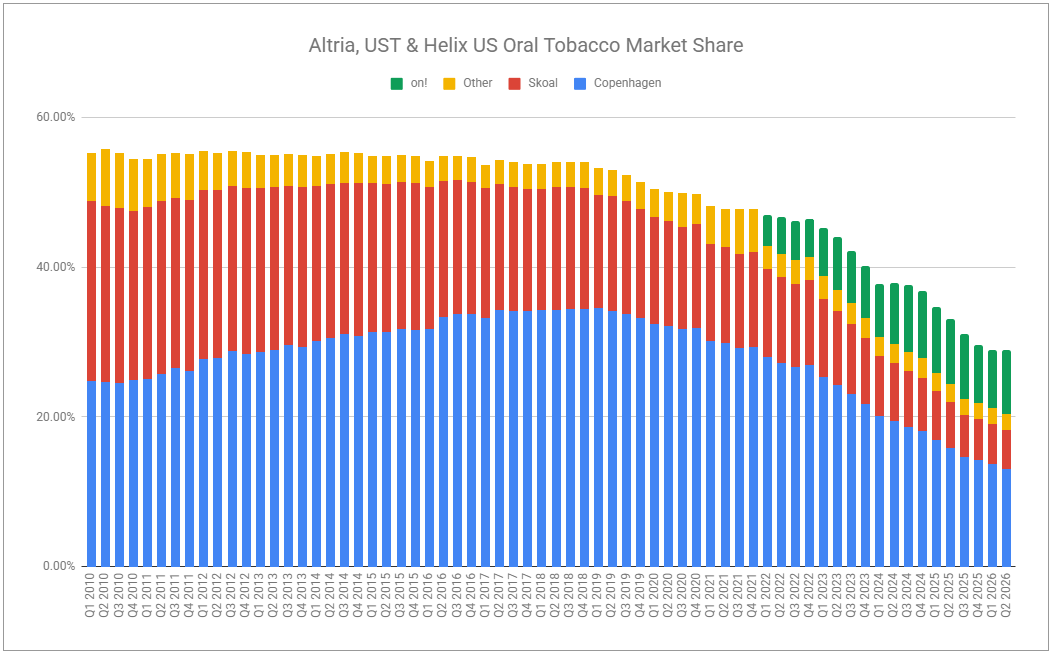
There is no hiding that the legacy cash cows of Copenhagen and Skoal are threatened, and all the more so courtesy of the FDA’s Guidance For Industry, which will inevitably lead to a greater migration from the old to the new. Altria certainly has an uphill battle in the oral space, especially with the recent launch of ZYN Ultra and the soon-to-be launch of Velo Max, but several caveats suggest H1’26 figures paint a more dire picture than what may unfold.
Keep reading with a 7-day free trial
Subscribe to Invariant to keep reading this post and get 7 days of free access to the full post archives.