

“Were Edgar not in the cigar business, he would have been a wonderful investment banker. Basically, he is a manager of assets. Where he’s made the greatest strides has been in buying properties very, very well. If you look at the history of that company, it’s been managed as if it were a very successful portfolio.” - Dan Lufkin, Cigars and Other Passions, p.224
Tobacco history is a richly woven tree. Countless seasons, with companies forking new branches, shedding leaves, and new operators forming from seedlings. No matter the era, there are echoes connecting the present to the past.
As covered last week, Edgar M. Cullman’s Brilliance led General Cigar to become the largest cigar manufacturer in the United States, with an exceptional portfolio of products. There can be no denying Cullman’s cunning, nor his constant commitment to quality, and there is seemingly endless nuance in how General Cigar succeeded through tumultuous periods when so many others failed.
Cullman and his investors took a 45% stake in General Cigar, coinciding with the Cuban Embargo. While Cullman did not predict the Embargo, he recognized the strained relationship of the two countries and expected things to get worse. It was only following the 1969 acquisition of the Temple Hall factory in Jamaica, which was tucked into the previously-purchased Gradiaz Annis & Co., that General began to offer a premium handmade cigar.
But there is an oddity in the storyline. Why was the brand that would go on to become the top seller in the United States, Macanudo, produced in Jamaica rather than any other location? Before its acquisition, why was it focused on exports to the UK? It would be logical to assume that following the Embargo, fully enacted in 1964, some production was moved from Cuba to other countries. Some was. But not in this case. This instance was multiple decades old, resulting from factors weighed during World War II.
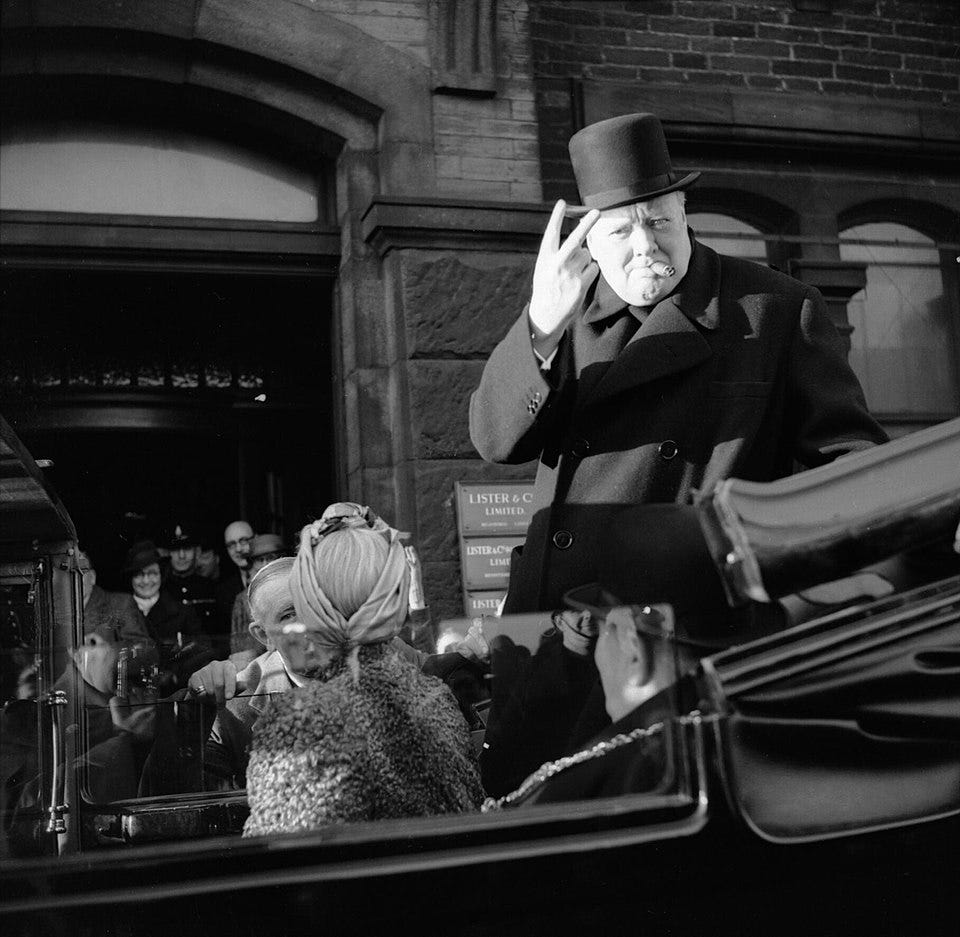
In the United Kingdom, cigars were in vogue, championed by none other than Prime Minister Winston Churchill. As popular as Cuban cigars were, there was a problem. The UK had enacted capital controls, restricting the outflow of pounds sterling. This made trade rather difficult, and made acquiring Cuban cigars especially trying. Temple Hall’s presence in Jamaica circumvented the issue because Jamaica was part of the Commonwealth at the time. Production still utilized Cuban tobacco, but finished cigars being moved into the UK technically kept pounds sterling within the Commonwealth.
Temple Hall’s original brand connects a grander part of cigar history and contrasts with later efforts made by General Cigar. Originally, one of the largest vitolas produced by the company was called “The Churchill”, also coined by Romeo y Julieta, which was Winston Churchill’s preferred brand. Temple Hall’s brand was rebranded to Macanudo only after production was moved to Jamaica. Before that, the brand was known as Punch. It is believed that the company wanted to avoid potential confusion between its Jamaican-produced cigars and Punch cigars which were still produced in Cuba. This contrasts sharply with General Cigar’s approach to Cohiba, which was opportunistically relaunched to benefit from being confused with Cuban-produced Cohibas. And while Temple Hall rebranded to avoid confusion, eschewing the use of the Punch name, General Cigar would purchase the brand rights to the non-Cuban variant of Punch three decades later (Villazon, acquired in 1997).
While the Cuban embargo had the most pronounced long-term effect on the cigar industry in the United States, especially on domestically produced premium handmade cigars, other factors proved equally important. Last week’s piece noted:
Then, in 1964, Surgeon General Luther Terry released his report on the health risks of smoking. While this created significant uneasiness within the industry, it was actually a boon for handmade cigars. Over the following years, an increasing number of the public began to believe that smoking caused cancer, but, since handmade cigars are consumed without inhalation of smoke, many consumers shifted their consumption.
While supportive of handmade cigars, the report also boosted sales of smaller machine-made (mass-market) brands. Of those brands, none were as radically successful as General Cigar’s Tiparillo, with its iconic “Should a gentleman offer a Tiparillo to a lady?” marketing campaign.
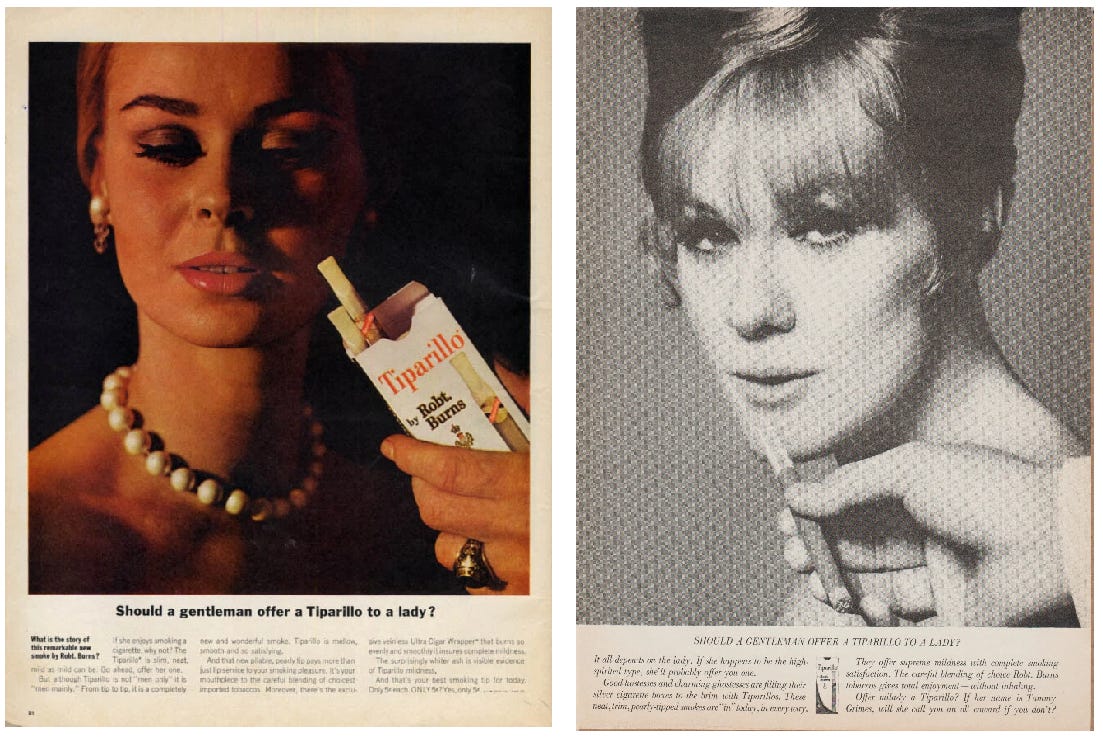
Tiparillo sales climbed, and General Cigar’s profits followed. The company expanded not only into premium handmade cigars but also acquired numerous businesses outside of cigar manufacturing. One of the first actions was purchasing the Cullman family’s business, which grew prized Connecticut Shade tobacco. In 1964, General then acquired two major tobacco distributors, Metropolitan Tobacco and New Jersey Tobacco, which moved not only cigars but also cigarettes, candies, and other miscellaneous consumables. Neither of the distribution businesses looked attractive on paper. They were low margin and experienced endless headaches dealing with the Teamsters Union. However, the owners of both companies were looking to sell, and General Cigar was already one of their largest clients. Purchasing such distribution promised that General-owned brands would continue to flow through countless retail outlets.
General Cigar did not end there in expanding its distribution footprint, acquiring Deerstein Brothers and Eli Witt in the following years. The company further enhanced its vertical integration in 1967, acquiring the Connecticut wrapper tobacco and nursery operation of American Sumatra Tobacco Corporation. By 1969, General Cigar’s revenues hit $246 million, roughly increasing by 720% from when Cullman and his set of investors took control eight years prior.
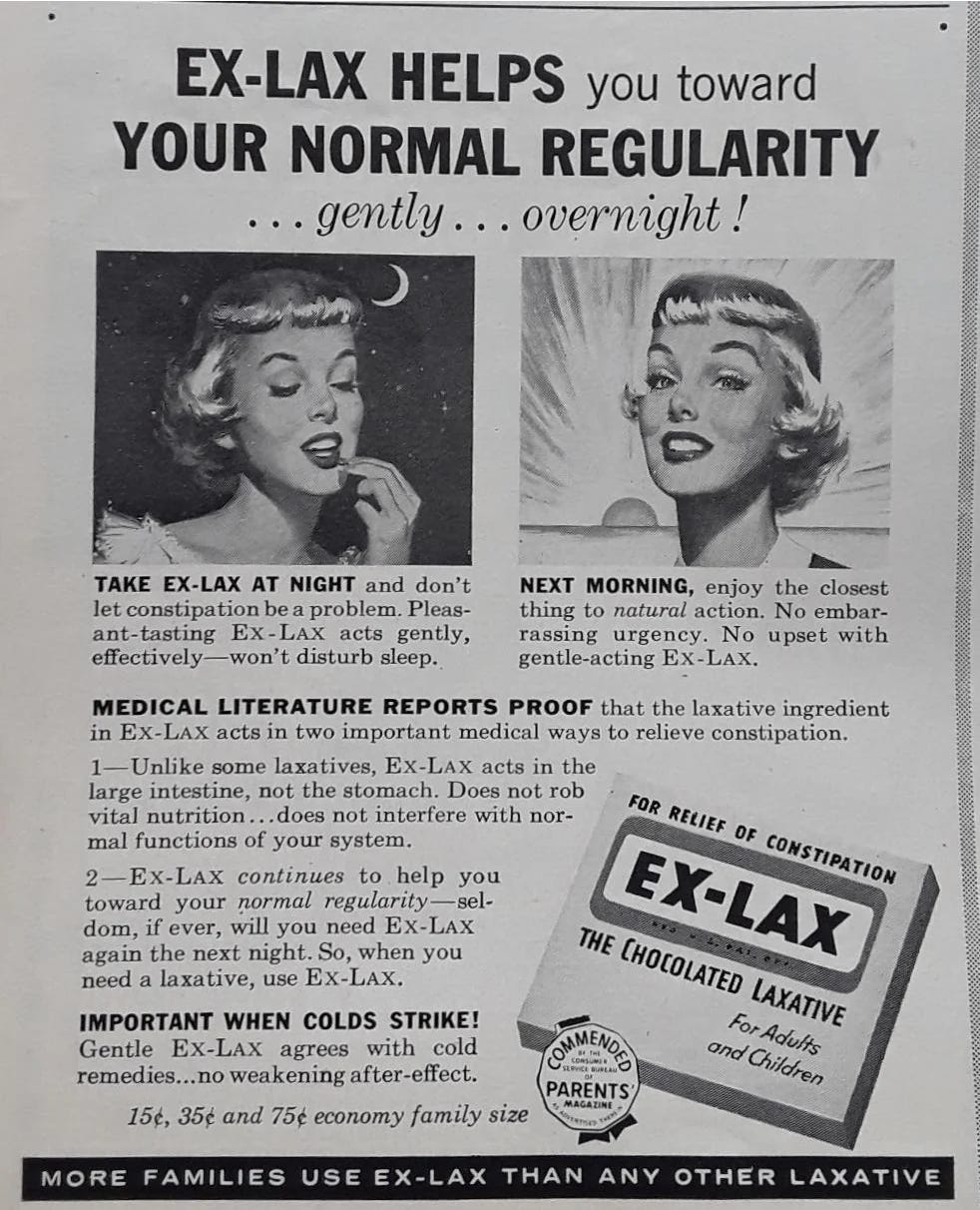
Just as not all of General Cigar’s growth was organic, not all of it was in any way related to cigars or even tobacco. In true tobacco industry fashion, the company made several acquisitions that were completely out of place. The most odd would be the purchase of Ex-Lax. Perhaps, in a sudden moment of clarity, the company realized how strange this was. Roughly a year after the purchase, the company began talks with Pfizer to sell the business. Fortunately for General Cigar, those talks fizzled out. This marks one of the rare instances in which a tobacco company didn’t lose its shirt making a non-tobacco acquisition. Ex-Lax was eventually sold in 1981 to Sandoz for $100 million, far over the group’s initial purchase price of $33 million.
Having achieved a fair degree of vertical integration and expanded its product portfolio, General Cigar appeared to be in a prime position heading into the 1970s. The Public Health Cigarette Smoking Act of 1969, signed by President Nixon on April 1, 1970, took effect in January 1971, banning cigarette advertising on radio and television.
The legislation had several pronounced effects on the industry, the first of which was largely insulating market shares for respective cigarette brands. It also freed manufacturers from significant advertising expenses. Without dollars from major tobacco manufacturers flowing into major media outlets, the void left meant airtime became far more affordable.
Naturally, the industry capitalized on this culmination of events. The Public Health Cigarette Smoking Act concerned cigarettes, not small cigars. So why not sell cigars so small they were nearly identical to cigarettes? R. J. Reynolds acquired Winchester. Philip Morris, then run by Edgar’s brother Joseph F. Cullman III, introduced B&H small cigars. A new market formed, and the battles would be fought over the airwaves. General Cigar had Tiparillo, but, wanting something smaller, smoother, flavored, and easily approachable, launched Tijuana Smalls. The company put massive marketing behind the brand, with the jingle:
Tijuana Smalls, ten for the road baby, for you maybe, you know who you are, you know who you are.


Despite an initial meteoric rise, the growth of mass-market small cigars would stall and reverse. The Little Cigar Act of 1973 erased the loophole that had been capitalized on. Small cigars could no longer be marketed on the radio or television. The impact of the marketing faded quickly. Many consumers who had previously shifted their consumption to avoid the inhalation of cigarette smoke following the Surgeon General’s report, unwilling to part with nicotine entirely, found their way back to cigarettes. Manufacturers over-indexed to mass-market cigars, and especially those who aggressively invested in greater production capacity, saw their profits take a hit when this reversal occurred. General Cigar did not entirely avoid such pressures, but its product portfolio and subsequent sales continued to grow.
General Cigar continued to accumulate purchases of distributors, plastics manufacturers, packaging manufacturers, and more. To expand its tobacco offerings while avoiding smoke, it acquired the Helme Tobacco Company, a producer of fine snuff and chewing tobacco, in 1975. This acquisition also diversified General Cigar, as Helme owned Bachman Foods, a producer of salty snacks.
While tobacco very much remained the core of the business, to reflect its more diversified nature, General Cigar changed its name to Culbro Corporation in 1976. Acquisitions continued, with other smaller snack businesses purchased. However, all were sold off piecemeal throughout the late 1970s and early 1980s, as Cullman found that snacks were much more challenging to grow profits from than tobacco. Edgar’s son, Edgar M. Cullman Jr., once explained1:
…the biggest problems have to do with distribution, most particularly supermarket distribution. With the exception of Frito-Lay (owned by Pepsico, which has formidable clout with supermarkets), most snack food companies are regional, and stock their shelves with the aid of independent contractors who have snack routes, much the way regional bakeries have contractors with bread routes. It was a struggle to expand outside of regions where the routes were established. Moreover, the routes themselves were labor-intensive relative to the amount of product each contractor delivered. On top of that, customers in each region seemed to like their own brands. So changing some of the regional brand names to Backman produced a kind of negative synergy.
The company’s Midwest snack business was sold to Borden, which had a more sizable presence. But the hurdles that Edgar Jr. described were still too tall. After years of struggle and a slumping stock price, Borden was acquired by Kohlberg Kravis Roberts & Co. in 1994. Not only was this the largest purchase done by KKR since taking over RJR Nabisco, but the firm used its RJR Nabisco stock to fund the transaction.
If you enjoyed this piece, hit “♡ like” on the site and give it a share.
Questions or thoughts to add? Comment on the site or message me on Twitter.
Ownership Disclaimer
I own positions in Scandinavian Tobacco Group and other tobacco companies such as Altria, Philip Morris International, British American Tobacco, and Imperial Brands. I also own positions in Haypp Group, a major online retailer of reduced-risk nicotine products.
Disclaimer
This publication’s content is for entertainment and educational purposes only. I am not a licensed investment professional. Nothing produced under the Invariant brand should be thought of as investment advice. Do your own research. All content is subject to interpretation.
Additional resources:
Hochstein, Jacob. Cigars and Other Passions: The Biography of Edgar. M. Cullman. Trafford Publishing, 2010.
An Interview with Edgar M. Cullman Sr - Cigar Aficionado. Source
Scandinavian Tobacco Group - Financial Reports. Source
Cigars and Other Passions, p. 218
Devin, any idea what's up with Haypp? swedish friend says a bank dropped coverage and some swedish guy put out a short rec. Don't have any details though.